Field Sites


I have worked in multiple field sites across India and outside India through collaborations. In India we currently focus mainly in two regions – central India and the Terai-Duar Savanna and Grasslands ecoregion.

Through ongoing projects, we are working across the entire state of Madhya Pradesh, studying diversity and species distributions of multiple taxa (trees, birds, butterflies, large mammals), but mainly of the important tree species. Our sampling sites for these taxa and also for studying functional trait variation in tree species are illustrated in the figures below.
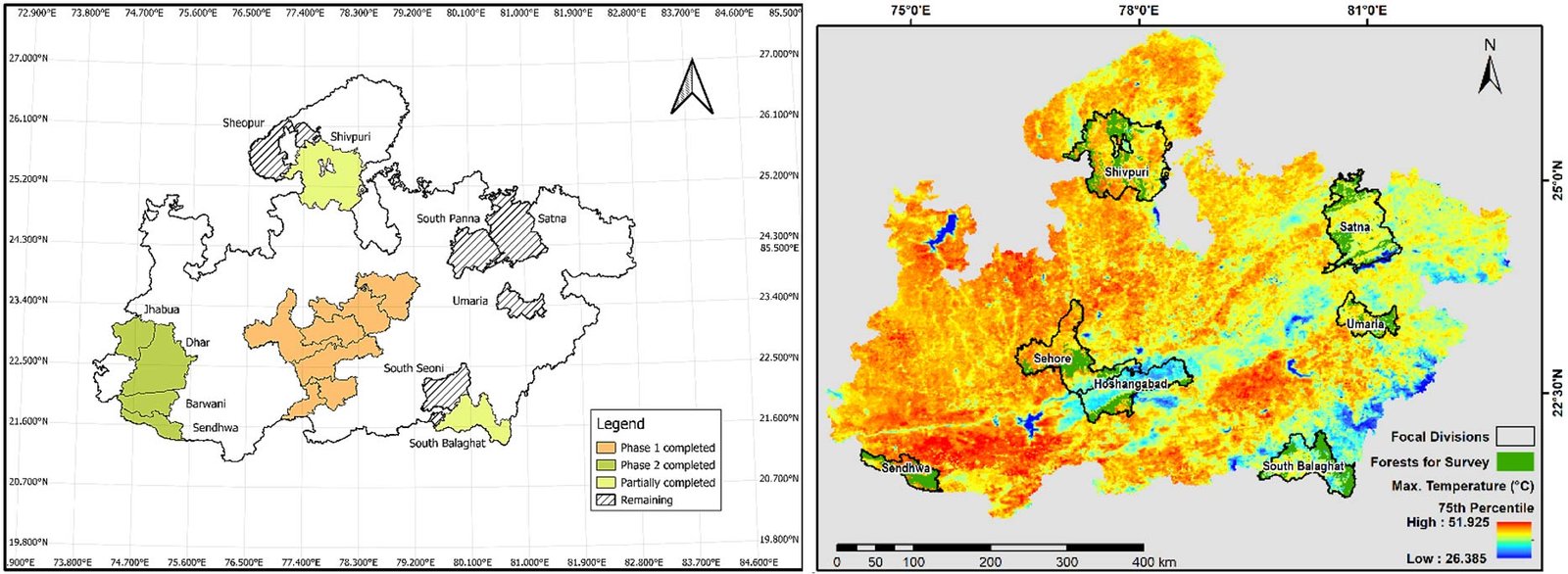
 
The left panel show sites in Madhya Pradesh where have or are carrying out field sampling for the Green Indian Mission project. The right panel shows sites where functional trait variation in tree species are being studied under the MoE STARS Project. The background is the temperature gradient in Madhya Pradesh.
 

In the Terai-Duar Savanna and Grasslands ecoregion, we have focused fieldwork mainly in Manas National Park, Assam.
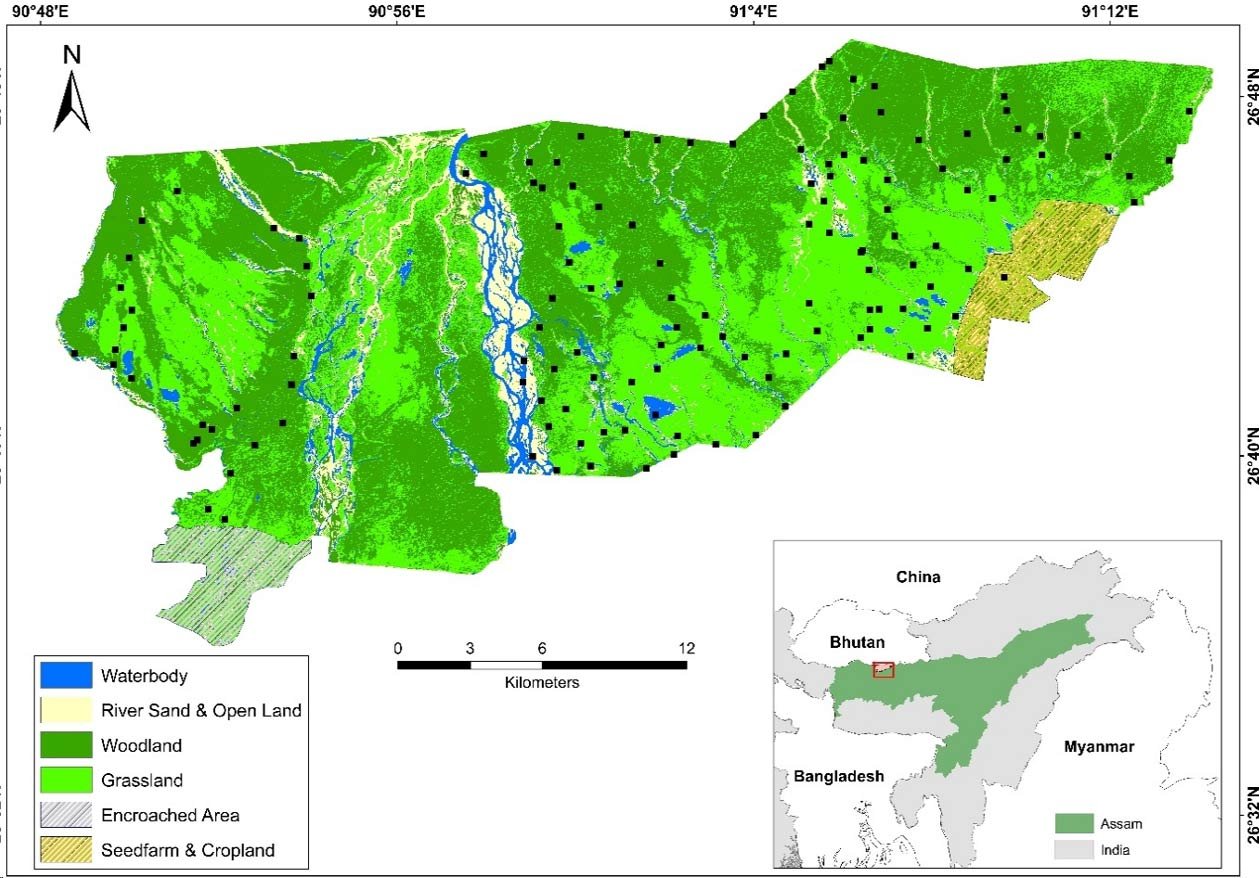
 
The location map of Manas National Park with vegetation sample plots shown as black filled squares.
 

But through landscape ecological analyses using remotely-sensed data we have studied other protected areas in the Terai region.
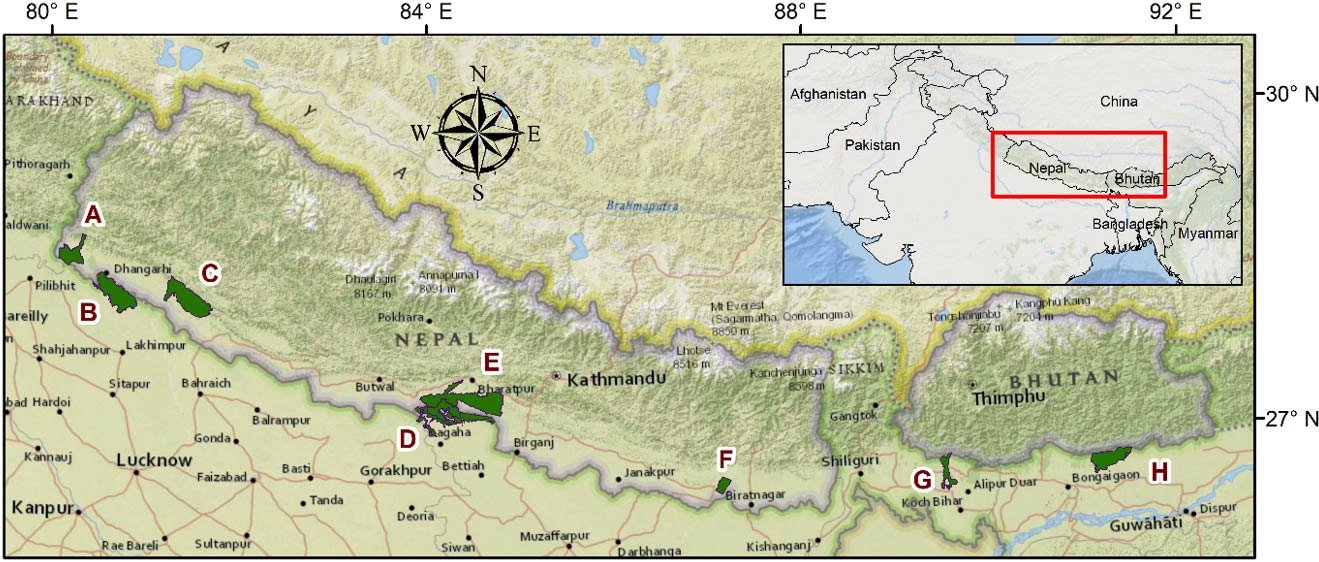
 
Eight Terai protected area sites (shown in dark green) in India and Nepal that have significant areas of grasslands. Most other grasslands sites outside these protected areas hav e been transformed to agriculture or other land uses. (A) Shukla-Phanta National Park, (B) Dudhwa National Park, (C) Bardiya National Park, (D) Valmiki Tiger Reserve, (E) Chitwan National Park, (F) Koshi-Tappu Wildlife Sanctuary, (G) Jaldapara National Park, (H) Manas National Park.
 

Now, with a large-scale study of the Terai-Duar Savanna and Grasslands ecoregion, we will focus on the entire extent of the in the Indian Subcontinent, with field sampling to be done in four clusters of sites across the entire East-West extent of this ecoregion.
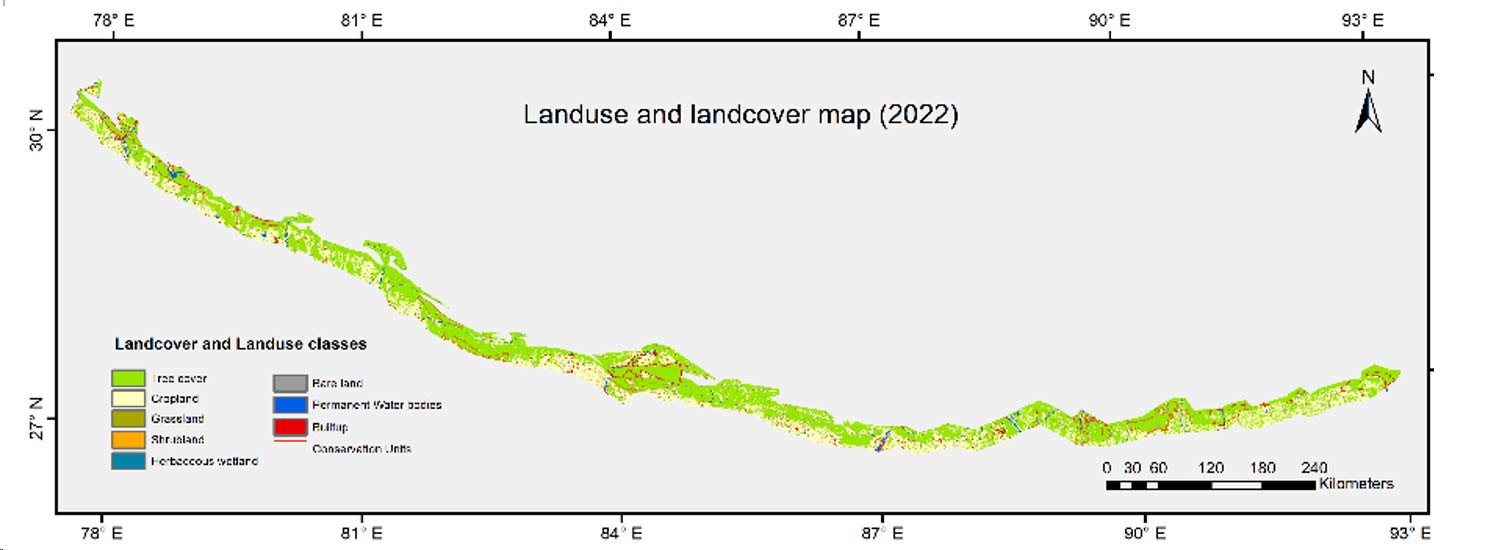
 
Current land use and landcover of the Terai-Duar Savanna and Grasslands ecoregion in the Indian Subcontinent. A large section in the middle lies in Nepal.
 
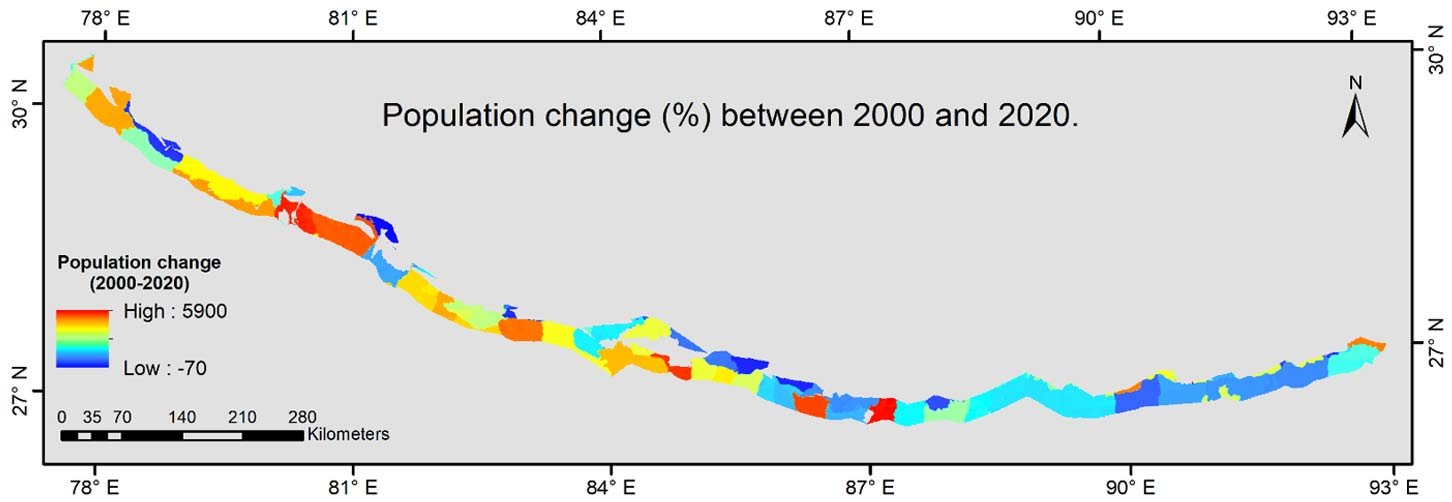
Population changes during the two decades 2000-2020 in the Terai-Duar Savanna and Grasslands ecoregion in the Indian Subcontinent. A large section in the middle lies in Nepal.
 
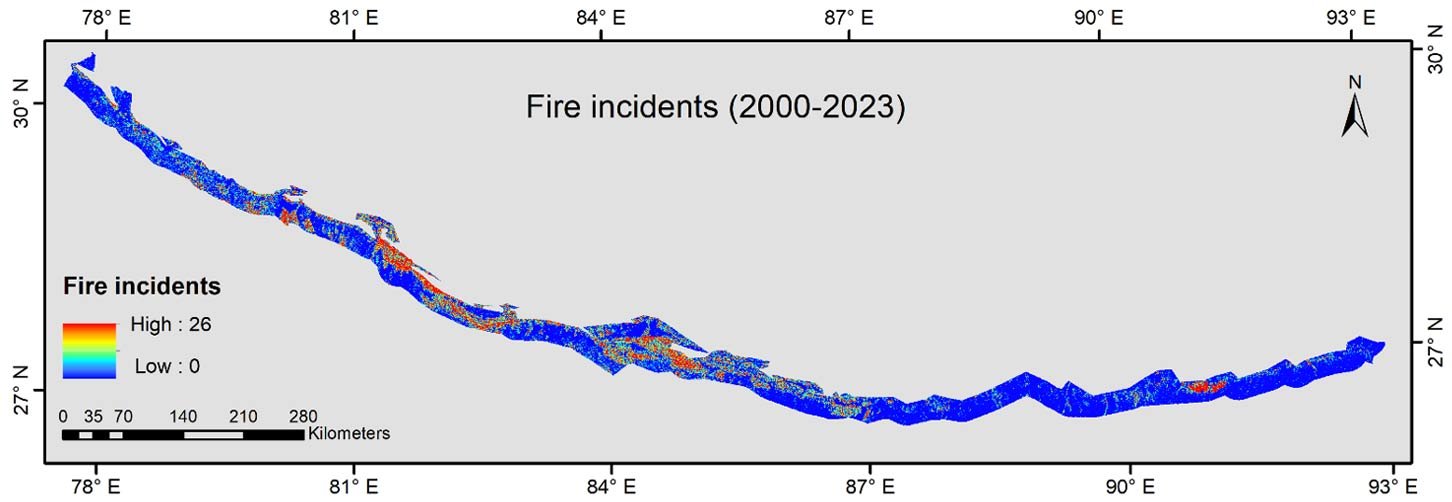
Incidents of ground fires as captured by a NASA Satellite sensor from 2000-2023. We found that fires are a common feature in grassland areas, and fire is often used as a tool for wildlife habitat management.
 
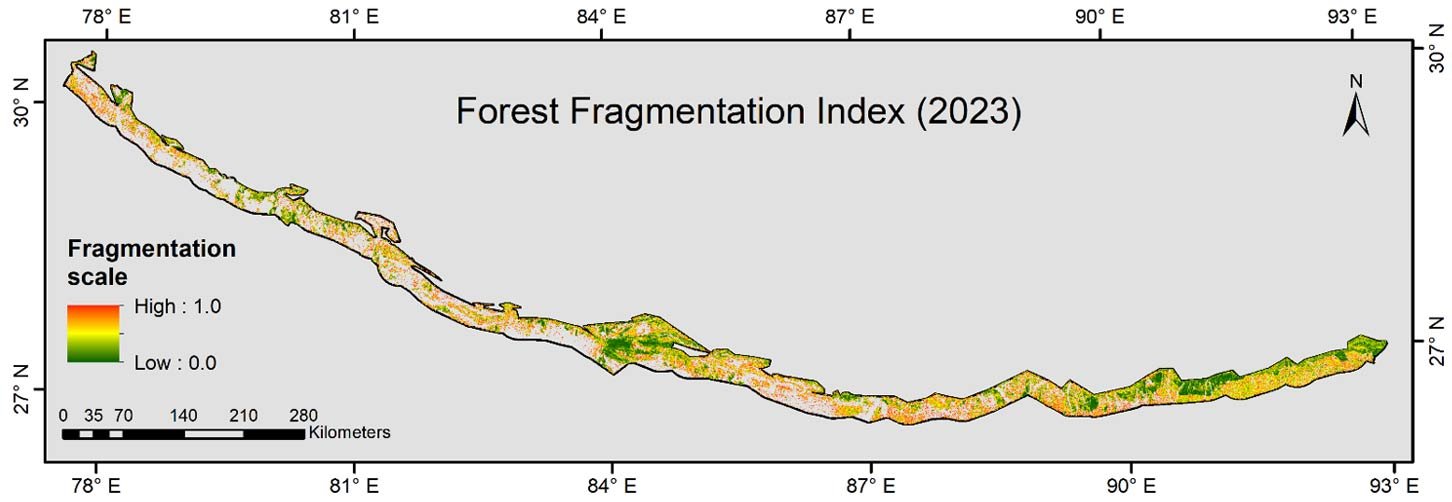
The Terai region has seen extensive human population expansion with concomitant decline in areas under natural vegetation. Fragmentation of natural habitats is cause for serious concern and greatly accelerates habitat degradation and loss of species.


Explore more