
 We started with a global scale analyses of climate change impacts on montane vegetation, and showed that `greenness' of vegetation in species-rich tropical montane systems is decreasing due to climate warming-induced drought stress. Further a fundamental nature of the climate-vegetation relationship may be undergoing reversal due to an interactive influence of temperature and drought stress.
Moving on, we studied degradation and deforestation of subtropical broadleaf forest in recent decades in the Teesta River basin of the Eastern Himalaya. This has drawn attention to forest conservation issues in Sikkim, India. A very detailed investigation on woodland-grassland dynamics of the eastern Terai is shedding light on how to manage plant diversity and wildlife habitat in this region, where there is immense pressure from human activities. Results published in Global Change Biology, and Applied Geography. In parallel, we are also investigating the patterns of alpha (local richness) and beta (species and functional trait turnover in space) in Indian montane forests to understand what governs these patterns and how such knowledge can be used for conservation.
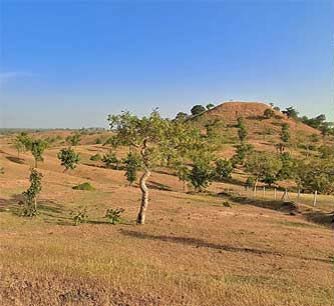
We have begun two new projects, one on understanding adaptive capacity of tropical dry forest tree species to drought stress and heat stress, and the other on understanding recent decadal scale changes to vegetation and landcover in the entire Terai region of the Indian Subcontinent. In both these projects we will examine landscape and regional scale patterns, then sharpen focus to smaller scales to present data and analyses that can contribute decision-making. Here we also plan to use new tools such as Causal AI to evaluate causal influence and inform decisions.