
Ongoing Projects
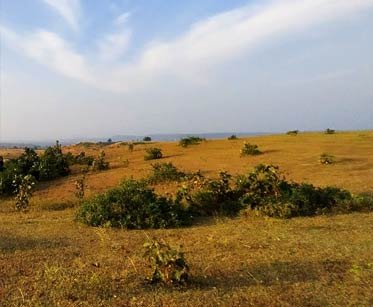
Recent decadal-scale changes in land use/land cover in the Terai-Duar Savanna and Grasslands Ecoregion: Implications for terrestrial carbon cycling and plant biodiversity.
Here, we focus on a unique ecoregion in the Indian subcontinent, called the
Terai-Duar Savanna and Grasslands ecoregion (TDSG). We document land use/cover changes that have taken place in
the last few decades focusing mainly on the loss the grassland habitats, increase in
deciduous forest sites, increase in agricultural land and built-up areas. Next, we
examine the consequences of these changes for plant diversity, ecosystem services,
aboveground and belowground biomass pools, soil carbon fractions, and even ant
diversity and ant-mediated soil engineering effects.
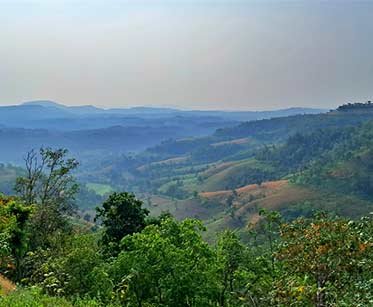
Monitoring Biodiversity and Ecosystem Services for Ecosystem Enhancement under the Green India Mission (GIM)
In this project we focus on evaluating the potential for achieving GIM objectives in the state of Madhya Pradesh. The broader objectives of GIM at the national level are (i) increasing tree cover or forest cover in forest and non-forest lands, (ii) improving ecosystem services including biodiversity, carbon sequestration, and hydrological services, and (iii) increasing forest-based livelihoods for millions of households.
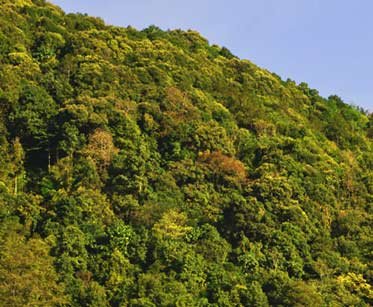
Investigating adaptive strategies of forest trees to temperature and water stress to inform climate-resilient forestation in central India
Climate change-driven heat stress and drought stress will impact tropical ecosystems if tree species cannot cope through adaptation or range shifts. Forest restoration through active tree planting can mitigate climate change impacts, but plantations would suffer the same consequences due to climate change as natural forests. Restoration plantations should, therefore, be climate-resilient and robust against future environmental changes to ensure the flow of ecosystem services.
Recent decadal-scale changes in land use/land cover in the Terai-Duar Savanna and Grasslands Ecoregion: Implications for terrestrial carbon cycling and plant biodiversity
This study involves the Terai-Duar Savanna and Grasslands (TDSG) ecoregion, a relatively small in geographical extent, occupying only about 50,000 km2 in area. Our first objective is to quantify the changes in LULC in the last four decades for the entire region. This will allow us to view the overall trends and also present the spatial and temporal signature of these changes. We will also explore and build appropriate land use change models to understand the drivers and interactions that are responsible for these changes, including transitions between forest, savanna, and grassland. Next, we plan to understand how these LULC changes have affected the terrestrial carbon cycling for the entire ecoregion.
Past Studies
- Monitoring Biodiversity and Ecosystem Services for Ecosystem Enhancement
under the Green India Mission.
Funded by: Madhya Pradesh State Biodiversity Board, Government of Madhya Pradesh. (Aug. 2020 - Mar. 2022) - Life-history constraints in grassland plant species of the Eastern Terai in India: Are trade-offs associated with competition, growth, and defense important for community structure.
Funded by: Science and Engineering Research Board (SERB), Government of India (Feb. 2019 – Feb. 2022). - Population and species survival assessment of red panda (Ailurus fulgens) in Singalila National Park, West Bengal: potential trajectory following re-stocking of the population under the captive breeding programme.
Funded by: West Bengal Zoo Authority. Government of West Bengal. (Oct. 2018 – Oct. 2019) - Fine scale assessment of tiger (Panthera tigris) connectivity networks in Panna Landscape, Madhya Pradesh.
Funded by: Madhya Pradesh State Biodiversity Board. Government of Madhya Pradesh. (Jan. 2018 – Jul. 2018). - Understanding the degradation and loss of primary forest in the Teesta valley of the Sikkim Himalaya: A framework for recovery and management of biodiversity and bioresources.
Funded by: National Mission of Himalayan Studies, Ministry of Environment & Forests and Climate Change, Government of India. (Apr. 2016 - Mar. 2019). - Co-investigator & Mentor. Landscape genetics of Panthera tigris in northeastern India. DST-SERB.
National Post-doctoral Fellowship awarded to Dr. Mriganka Shekhar Sarkar. (2018 – 2020). - Co-investigator & Mentor. Ecological restoration of mined-out areas in eastern Indian coal fields.
DST-SERB National Post-doctoral Fellowship awarded to Dr. Shruti Mishra. Rs.19,20,000. (2017 - 2019). - Visiting Scientist. Eminent Foreign Teachers Progam, Hainan University, Haikou, P. R. China (Jul.2018 – Jul. 2019)
- Visiting Scientist Fellowship, Chinese Academy of Sciences. Hosted at the South China Institute of Botany, Guangzhou, P.R. China. (2014 - 2016).
- Recovery of the Tiger Panthera tigris and its prey in Manas National Park, Assam, India.
Funded by: United States Fish and Wildlife Service. Rhino and Tiger Conservation Program, USA. (Apr. 2012 - Oct. 2014). - Institutional project between ATREE, Bangalore and the Norwegian University of Life Sciences on global climate change and biodiversity and agriculture. (Jun. 2007 – Jun. 2009).
- Research and Monitoring component of the UNESCO World Heritage Biodiversity Project sites in Assam, India.
Funded by: UNESCO. (2008- 2011). - Science and Education on the linkages between climate change and biodiversity.
Funded by: HSBC Bank and Coordinated by Earthwatch. (2009-2010). - Lead Principal Investigator and Coordinator. Programme Support for Technological Innovations and Ecological Research for the Sustainable Use of Bioresources in the Sikkim Himalaya.
Funded by: Dept. of Biotechnology, Government of India. (2009 – 2016).

